A-
A+
“In the face of poverty and ever-rising costs for everyday people, there is a determination amongst our community to keep striving for better – and I feel grateful to be involved with all these dedicated humans.”
“We represent charities, community groups, CICs, food banks, community kitchens, faith groups, housing estates, social enterprises, and neighbours. All working together, side by side.”
Rachel King, Coordinator, Hackney Food Network, Hackney CVS
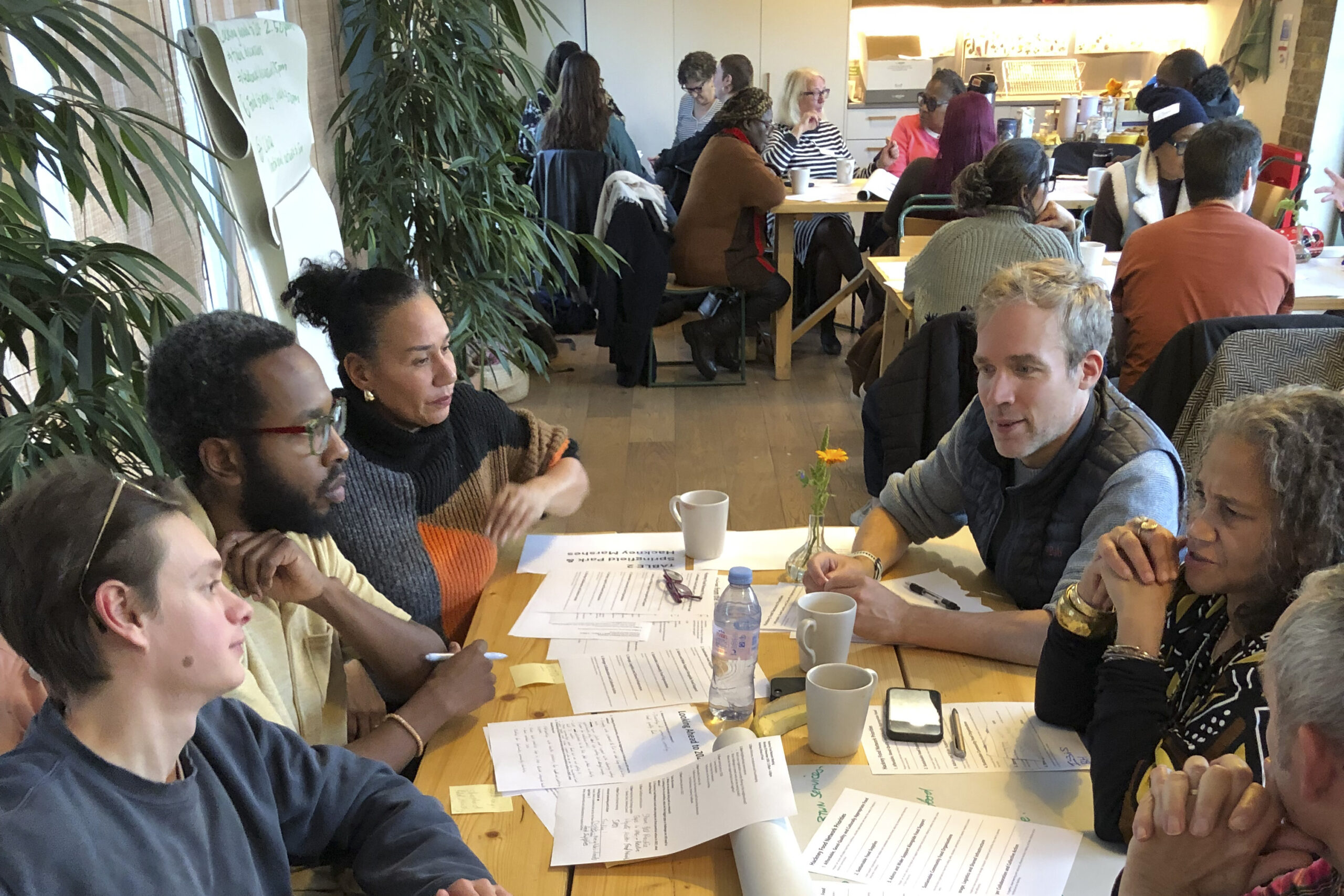
On Monday 23 November, Hackney Food Network members gathered at Hackney School of Food to reflect on the Network’s work in 2026 and consider where to focus together in 2027.
The meeting brought together people working across Hackney’s community food sector to share what they offer, what they are seeing locally and where collaboration could make a difference.
The meeting also comes at an important time for Hackney CVS as we strengthen our VCS Leadership Infrastructure, creating more connected opportunities for voluntary and community sector organisations to collaborate, exercise collective leadership and influence decisions that affect the communities they serve.
The Network’s six priorities grew from discussions at its June and July meetings, following a request from Cllr Sally Zlotowitz for the network’s key priorities. Members’ conversations helped shape a shared framework covering:
At the November meeting, members reviewed survey feedback to consider whether these priorities still reflected organisations’ concerns. Of the 27 respondents, 96% said the priorities fully or mostly reflected the issues most relevant to their organisation.
Members particularly valued the Network for building relationships, creating opportunities to collaborate, sharing information and good practice, and learning about local services and support. Looking ahead, members asked for more focused discussions, working groups, collaborative problem-solving and opportunities to influence local decisions. Some also noted that workload and limited capacity can make it difficult to attend meetings.
Members heard feedback from a group discussion at Hackney Food Partnership’s relaunch on 22 October. The discussion explored what “Healthy Food for All” means in practice and how food insecurity connects with poverty, housing, wellbeing and people’s ability to meet their basic needs.
It highlighted that access to healthy food depends on more than food being available. Cooking facilities, fridges, freezers and safe storage matter too, particularly for people living in temporary accommodation, hostels and bedsits.
Community meals and shared food activities were recognised as ways to support good nutrition, reduce loneliness and strengthen relationships. Participants also emphasised food education for children, early intervention, and the knowledge, experience and trust held by grassroots, faith and culturally specific organisations.
This feedback helped inform the Network’s contribution to Hackney Council’s developing Food Strategy, demonstrating the important role of the Network in bringing community knowledge and frontline experience into wider strategic conversations.
Neighbourhood conversations showcased a wide range of activity, including community meals and lunch clubs, food pantries, surplus-food redistribution, community kitchens, cooking and nutrition workshops, and culturally specific support.
Members highlighted the value of the network’s connections, WhatsApp groups, mapping and signposting as ways to share information and help people find support. They also praised the commitment of volunteers and the diversity of organisations and communities involved.
At the same time, organisations are facing rising demand alongside stretched funding, staff time and volunteer capacity. Reaching people who may be isolated or “invisible”, providing nutritious and culturally appropriate food, and finding affordable space, kitchens, storage and transport remain significant challenges.
Members also noted that signposting alone may not be enough for people who need additional help to access wider services and support.
Members suggested a range of practical actions to explore, including establishing working groups, creating a shared volunteer database, improving the Food Support Map and signposting, and developing better ways for organisations to share or redistribute surplus food.
Other ideas included collective food buying, more neighbourhood networking, stronger connections with health services, and clearer information about funding and access to community buildings.
A specific issue members wanted to feed back to Hackney Food Partnership was why in-date food from supermarkets and grocers is being discarded instead of reaching food banks, pantries and co-operatives. This led into a wider discussion about sustainable food supplies, food resilience and whether resilience should be more clearly reflected in the Network’s priorities.
These were ideas raised for further discussion, rather than agreed commitments. The meeting helped identify where members might focus their collective energy as the Network develops its 2027 activity and contributes community knowledge to the wider Food Strategy.
The conversations at the Food Network reflect the wider direction of travel for Hackney CVS and our work to strengthen VCS leadership infrastructure across City and Hackney.
Through our networks, forums, and the renewed VCS Leadership Group, we want to build stronger connections between frontline experience, neighbourhood work, and strategic decision-making. Central to this is ensuring smaller, grassroots, and Black and Global Majority-led organisations have meaningful opportunities to shape priorities, influence decisions and exercise leadership across the wider system.
The Food Network is an important part of this infrastructure. Many of the issues raised by members cut across health, housing, poverty, mental health and social isolation, reinforcing the need for stronger connections across our networks and partnerships.
As we move into 2027, our ambition is to build on the strengths of existing networks, supporting them to be increasingly member-led, action-focused and connected to wider opportunities for influence and systems change.
This means creating spaces not only to share information and respond to immediate challenges, but also to develop collective solutions, share power and address the systemic inequalities that communities and the organisations supporting them continue to experience.
Hackney Food Network thanks Hackney School of Food for hosting the event and thanks everyone who shared their time, knowledge and perspectives.