
A-
A+
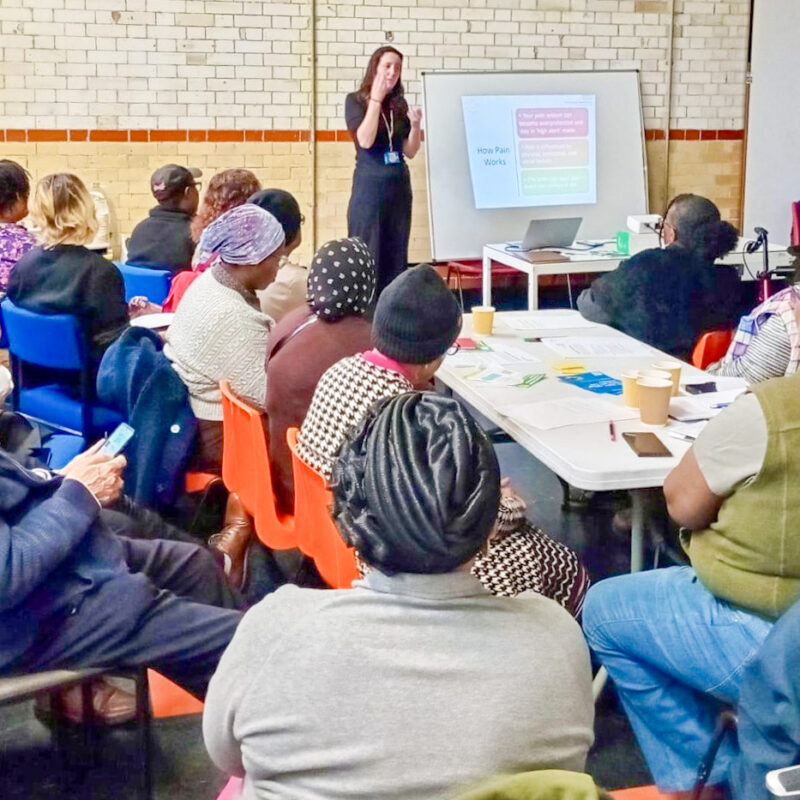
In October and November 2025, the Neighbourhoods team partnered with the Locomotor Pain Service to deliver four Neighbourhood Forums together.
At these events, members of the pain service team led accessible presentations and open Q&A sessions, helping residents understand how pain works, why it can persist, and what people can do to help manage it.
Through these community conversations, our team learned that long-term pain affects people of all ages across our neighbourhoods, and that many residents are not aware of the Locomotor Pain Service or the self-management tools and support available to them.
These forums highlighted both the scale of the issue and the importance of clear, compassionate information about chronic pain.
As a result, we are keen to continue and strengthen our partnership with the Locomotor Pain Service, working together to raise awareness, support residents living with persistent pain, and promote this vital work across the Neighbourhoods.
Anna Ferguson (AF): The Locomotor Pain Service is an integrated, multidisciplinary team that brings together physiotherapists, clinical psychologists/CBT therapists, occupational therapists, specialist nurses, and Pain Consultants. Although the name “locomotor” can be confusing, it has historical roots and is still recognised by many long‑standing GPs in Hackney.
Kasia Gabriel (KG): The service is therapy‑led and takes a holistic approach, focusing on helping people live well alongside persistent pain. Rather than relying on medical interventions alone, the team uses psychologically-informed physiotherapy and evidence‑based pain management approaches to support people’s physical and emotional wellbeing.
AF: Patients often face a wide range of non‑medical challenges that can significantly impact their ability to manage pain. These include housing issues, poverty, mental health difficulties, trauma, domestic violence, financial strain and stress linked to the cost‑of‑living crisis.
KG: The service also sees refugees and people with insecure immigration status who may be coping with extensive distress and uncertainty, making it even harder to manage pain. Cultural and language barriers also affect access to care, and the team often uses interpreters/advocates to ensure people can communicate their needs fully.
AF: The service works from a biopsychosocial model, recognising that biological, psychological and social factors interact to shape each person’s experience of pain. The team emphasises that the mind and body are deeply interconnected – pain is real, but its severity and persistence are influenced by stress, environment, mood and life circumstances.
KG: While the service includes consultant input, the primary focus is on therapy‑led care. Patients receive support that combines movement, education, psychological strategies and behaviour change to build self‑management skills.
AF: Chronic pain affects the whole person—not just the body. When people are dealing with homelessness, food insecurity, trauma, or social isolation, their nervous system is under greater stress, which can heighten pain making it much more difficult to cope with. Without addressing these wider issues, it becomes much harder for people to engage with pain management strategies.
KG: When basic needs aren’t met, clinical interventions alone cannot be effective. This is why the service often liaises with social prescribers and community organisations to ensure patients receive broader support.
KG: Collaboration is crucial for supporting people to transition from clinical care into community‑based support. The team emphasises the importance of helping people develop long‑term habits, whether physical activity, managing thoughts/feelings, connection with others, or engaging in meaningful roles.
AF: Community organisations can help people sustain the gains made in therapy by offering: local activity groups and classes: peer support; volunteering opportunities; social clubs or connection‑focused groups.
These links ensure patients have somewhere supportive to go once their sessions with the service end.
AF: Past collaboration with Hackney Volunteer Centre supported patients to explore volunteering, build confidence, and reconnect with meaningful activity.
KG: More recently, involvement in the borough’s peer support initiative, led by community partners, has created opportunities for people with lived experience of pain to support others. This has strengthened trust, community connection, and awareness of the service.
Community events, including large drop‑ins hosted with local GP practices, have helped the service reach people who might not otherwise engage.
KG: The team emphasises the importance of having a basic understanding of contemporary pain science. People with persistent pain benefit greatly when all professionals and volunteers share a consistent message, especially around self‑management, pacing, and the mind‑body connection.
AF: Misunderstandings can arise when people assume a particular treatment (e.g. massage or injections) is the “fix” for pain. While such treatments can help some people in certain situations, they are rarely long‑term solutions and may inadvertently steer people away from learning sustainable strategies.
A key message: every person’s pain is individual, and what works for one person may not work for another.
AF: Some of the myths the team regularly encounters include: “Pain is all in the mind.” This is false. Pain is real, and it always has a physical basis in the nervous system even if it doesn’t show up on scans.
“If nothing shows on a scan, nothing is wrong.” Many types of persistent pain do not appear on imaging.
KG: Another misconception is that “pain means damage.” For people with long‑term pain, an increase in pain is usually a flare‑up, not a new injury. However, the team would always recommend that any new or alarming pain should be discussed with your GP or healthcare professional.
“You should avoid movement if it hurts.” In most cases, movement is safe and beneficial; avoiding it can make pain worse.
AF: “If others can’t see it, it’s not real.” Chronic pain is an invisible condition, but its impact is profound.
AF: Your pain is real. Persistent pain is complex and is more to do with changes in the nervous system rather than tissue damage. Mind and body are not separate. Pain is a stressor, and does not happen in isolation. Systems that take part in stress response are chronically activated in people living with pain. This includes the musculoskeletal system with increased muscle tension being a common experience. Learning relaxation techniques for mind and body is important for managing pain.
KG: With the right skills and tools, people can live well alongside pain. Self‑management strategies are key to long‑term improvement. Support is available, and progress is possible but it involves team work with clinicians and patients.
The team regularly hears from patients who were initially sceptical but found the approach life‑changing.
AF: Working with Neighbourhoods allows the team to reach a wider audience, including people who might not normally access the service.
KG: It also helps: build awareness of local resources that can support long‑term self‑management; improve understanding of community needs; deliver consistent messages around chronic pain across sectors; connect with local forums and resident groups.
This cross‑sector approach helps embed pain support into everyday community life.
AF: Our key priorities include: redesigning and improving the Locomotor Pain Service website; improving access to resources and information; developing new workshops and webinars; expanding pain education for professionals and the public; making internal processes more efficient to reduce waiting times; strengthening community links to reach underserved groups.
KG: The team’s biggest wish is for a central, accessible resource (an app, online platform, or regularly updated tool) that lists local activities, support groups, and opportunities, ideally organised by postcode.
This would make it much easier to signpost patients to the right community‑based support.
AF: Keep an eye on the service’s website, which is currently being redesigned, we also have information leaflets. Look out for future webinars or public information sessions in the pipeline!
KG: After referral, patients are invited to attend an introductory session that explains the service and what to expect. Community partners may also attend these sessions to better understand our approach.
VWJ: Thank you so much for taking the time to talk to us, Anna and Kasia, it’s been fascinating to learn more about the important work you do to support people navigating their pain journeys. Our Neighbourhood facilitator team is looking forward to continued collaboration with you to help raise awareness of your service and share information.
Interview conducted by Veryan Wilkie-Jones, VCS Neighbourhoods Programmes Manager at Hackney CVS, with the Locomotor Pain Service Leads: Anna Ferguson, Clinical Psychologist, and Kasia Gabriel, Pain Specialist Physiotherapist.
Download Locomotor Pain Service leaflet
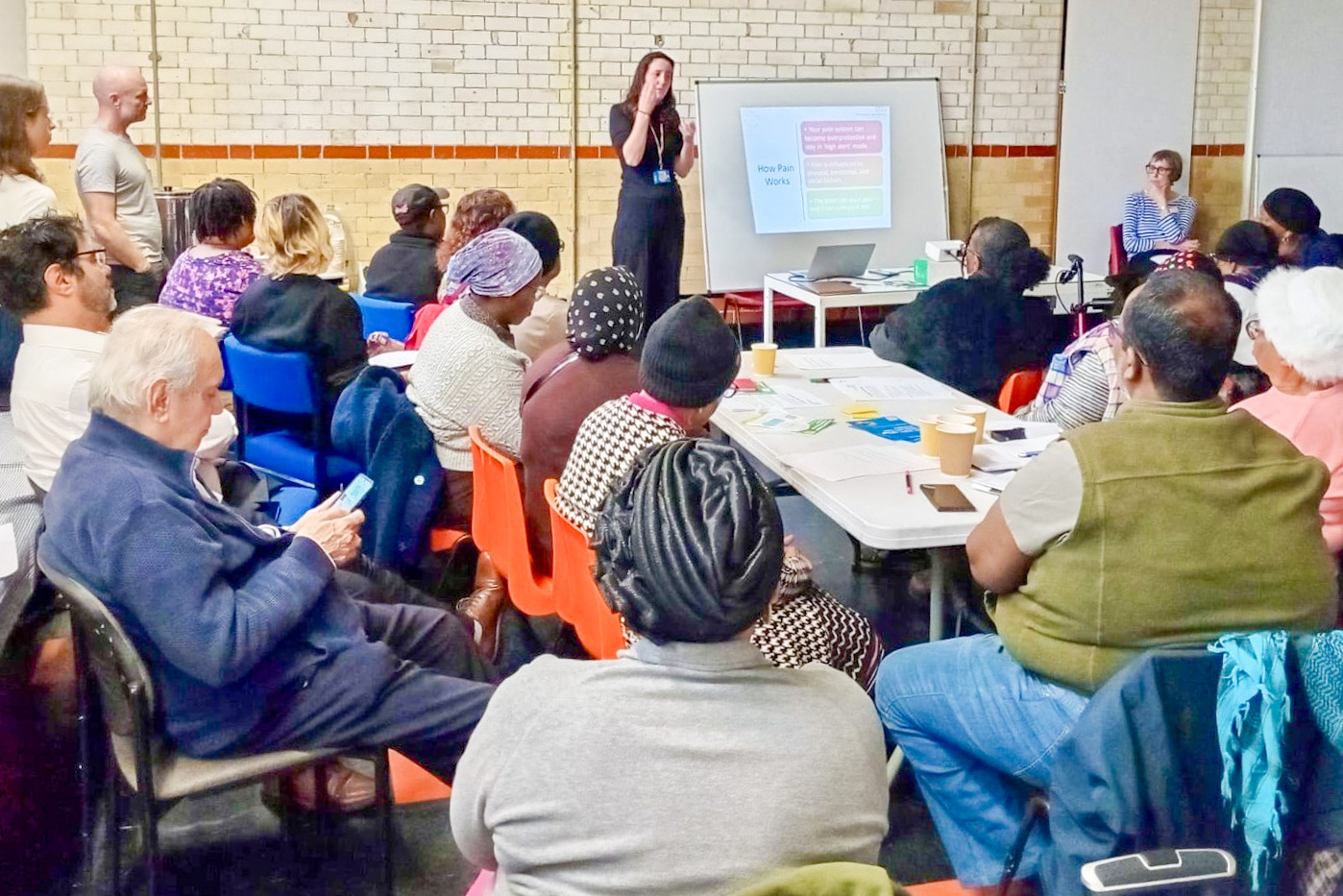
Photo above from Neighbourhood Forum focusing on the topic of pain management.